
Diwali 2026: Date, Lakshmi Puja Muhurat & Vidhi
When is Diwali 2026 — Sunday, 8 November. Lakshmi Puja shubh muhurat, the full five-day calendar, puja vidhi and the meaning behind Deepavali.
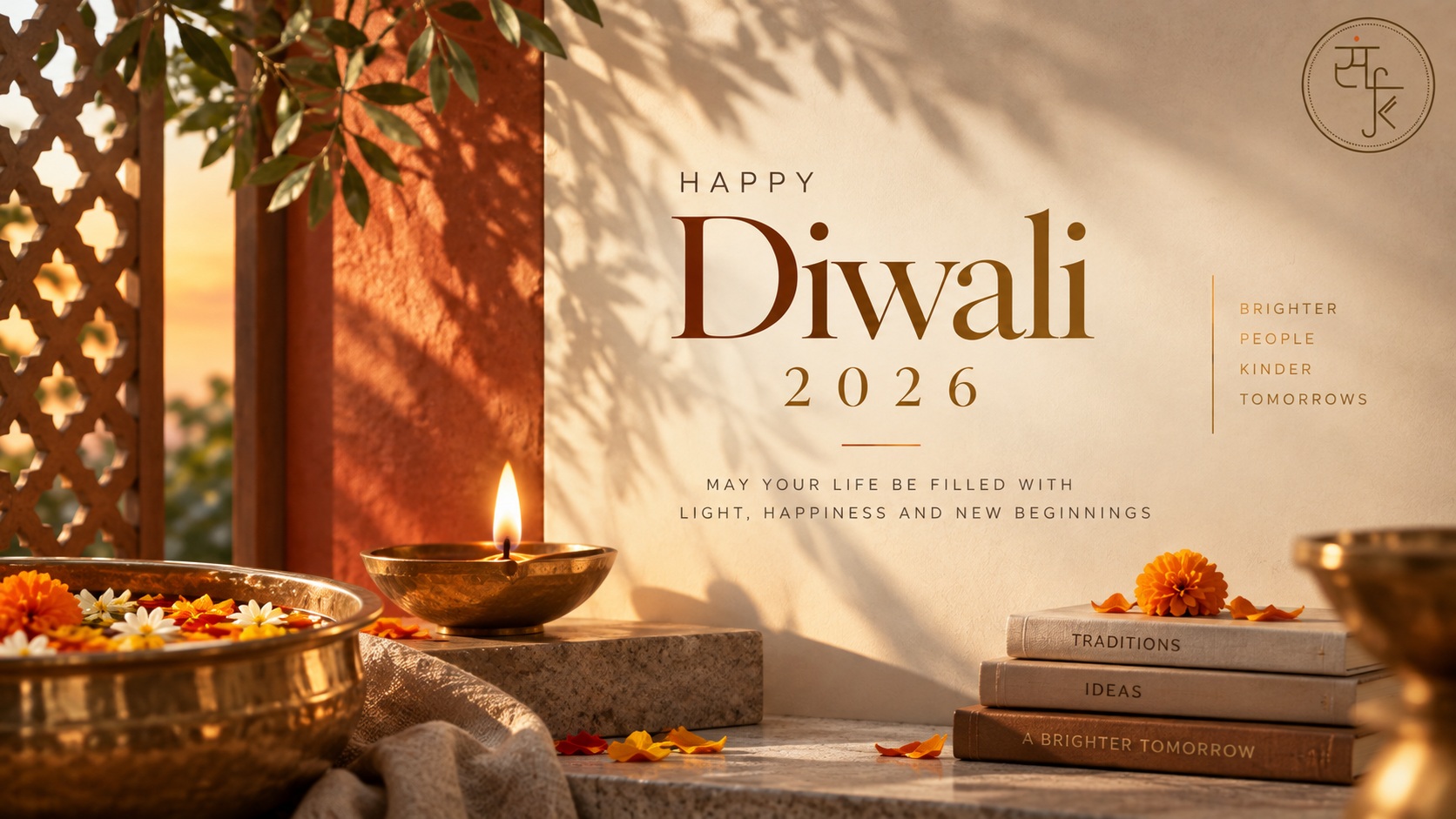
Diwali — the festival of lights — marks the victory of light over darkness, dharma over adharma, and hope over despair. In 2026, Deepavali falls on Sunday, 8 November.
Date & muhurat at a glance
Diwali (Lakshmi Puja): Sunday, 8 November 2026 · Kartik Amavasya
Lakshmi Puja muhurat: approx. 6:29 – 8:29 PM (New Delhi)
Pradosh Kaal: approx. 6:01 – 8:40 PM
The muhurat depends on sunset and changes by city — always confirm with your local panchang.
Diwali 2026 — the five days
| Day | Festival | Date (2026) |
|---|---|---|
| 1 | Dhanteras | 6 November · Friday |
| 2 | Naraka Chaturdashi (Choti Diwali) | 7–8 November (varies by panchang) |
| 3 | Diwali · Lakshmi Puja | 8 November · Sunday |
| 4 | Govardhan Puja | 10 November · Tuesday |
| 5 | Bhai Dooj | 11 November · Wednesday |
A note on the Naraka Chaturdashi date
In 2026 the Chaturdashi tithi runs from ~10:47 AM on 7 November to ~11:27 AM on 8 November — which is why some panchangs place Choti Diwali on 7 November and others on 8 November. Abhyanga Snan (the pre-dawn oil bath) is performed on the day when Chaturdashi prevails at sunrise. Please confirm with your local panchang.
See every date of the year in our 2026 Hindu festival calendar.
Why is Diwali celebrated?
- Rama's return to Ayodhya: After 14 years of exile and victory over Ravana, when Lord Rama returned, the people of Ayodhya lit ghee lamps to welcome him — that became Deepavali.
- The worship of Lakshmi: The new-moon night of Kartik is believed to be when Goddess Lakshmi visits; homes are cleaned and lamps lit to welcome her.
- The message of light: Lighting a lamp on the darkest night of the month — that is the essence of this festival.
Lakshmi Puja vidhi (simple steps)
- Clean the home; decorate the entrance with rangoli and diyas.
- Spread a red cloth on a chowki and place the idols of Lakshmi and Ganesha (Ganesha on the right).
- Place a kalash filled with water; light a diya and incense.
- Worship Ganesha first — "Om Gam Ganapataye Namah".
- Offer roli, akshat, lotus or marigold flowers, sweets and kheel-batashe to Goddess Lakshmi.
- Chant the Lakshmi mantra and perform the aarti.
- Light lamps throughout the home — especially at the main door and near the tulsi plant.
ॐ श्रीं ह्रीं श्रीं कमले कमलालये प्रसीद प्रसीद
श्रीं ह्रीं श्रीं ॐ महालक्ष्म्यै नमः॥
Meaning: O Mahalakshmi, seated upon the lotus — be pleased, be pleased. Salutations to you.
Samagri checklist
Chowki & red cloth · Lakshmi-Ganesha idols · diyas with ghee/oil · roli, akshat · lotus or marigold flowers · sweets, kheel-batashe · coconut · kalash with water · incense · dakshina
A thought for this Diwali
Light the lamp not only in your home but in your mind. Share sweets with someone in need, and celebrate with diyas and rangoli rather than firecrackers — that is the truest, and most modern, Deepavali.
Firecrackers and the animals around us
Diwali is a celebration for us. But the night we enjoy most is, for pets and for the street animals around us, the most frightening night of the year.
The reason is simple — they hear far more than we do. Dogs hear up to roughly 40–60 kHz; the human limit is about 20 kHz. A bang that sounds loud to us is many times louder to them, and repeated loud blasts can cause lasting damage to their hearing.
Signs of fear — learn to spot them
Trembling · panting · pacing · drooling · hiding (under a bed or cupboard) · barking or whining · scratching at doors and windows · trying to escape.
Escape attempts are the most dangerous — every Diwali, frightened dogs and cats bolt from home and lose their way.
For pets at home — 8 simple things
- Walk them before dusk. Crackers start once it's dark; finish the walk before that.
- Keep them indoors at night, with doors and windows shut.
- Draw the curtains. The flashes frighten them as much as the noise.
- Make one safe corner — the innermost quiet room, with their bed, water and a favourite toy.
- Play steady background sound — a fan, the TV or soft music takes the edge off each bang.
- Put an ID tag on the collar, with your phone number, in case they do get out.
- Don't scold them, and don't cling. Sit nearby and stay normal. Your calm settles them more than anything else.
- Never give any sedative or calming medicine without a vet's advice — human medicines can poison animals. If it's severe every year, speak to your vet before Diwali.
Street dogs, cows and birds
- Never set off a cracker at or near an animal. Tying a firecracker to an animal is a crime — report it on 112 or to a local animal welfare organisation.
- Street dogs often sleep under parked cars and in stairwells. Check before you light anything.
- If a frightened dog shelters by your gate, let it stay. For that night, that is its safe place.
- Leave a bowl of water on the terrace. Birds need it most on a smoke-filled night.
- Never aim rockets at trees or power lines — trees hold nests.
What the rules say
- Noise limit: in India it is illegal to make, sell or use firecrackers louder than 125 dB(AI) (or 145 dB(C)) measured 4 metres from the burst.
- Green crackers stay around 110–125 dB and release less smoke.
- Timing: many states restrict bursting to a two-hour window, commonly 8–10 pm. The order changes by state and by year — check your state's current rule.
- No firecrackers within 100 metres of hospitals, schools and courts.
The next morning — the part most people skip
Sweep up the unburst crackers and burnt sticks outside your gate. Cows and dogs swallow them as food, and the gunpowder can kill them. If you put out sweets or prasad, take them out of the plastic first.
And the smoke isn't only an animal problem. Infants, the elderly and anyone with asthma breathe the same air. A Diwali of diyas, rangoli and sweets is no smaller a Diwali — the morning after simply looks brighter.
Related reading
Shubh Deepavali! 🪔 May your life be filled with happiness, prosperity and light.
Frequently asked questions
When is Diwali 2026?
Diwali 2026 falls on Sunday, 8 November. It is celebrated on the night of Kartik Amavasya, the new moon of the month of Kartik.
What is the Lakshmi Puja muhurat for Diwali 2026?
As per the New Delhi panchang, the Lakshmi Puja muhurat is approximately 6:29 PM to 8:29 PM, with Pradosh Kaal running roughly 6:01 PM to 8:40 PM. The muhurat depends on sunset, so it differs by city — confirm with your local panchang.
How many days is Diwali?
Diwali is a five-day festival — Dhanteras, Naraka Chaturdashi (Choti Diwali), Lakshmi Puja (main Diwali), Govardhan Puja and Bhai Dooj.
Why is Diwali celebrated?
It is believed that Lord Rama returned to Ayodhya on this day after 14 years of exile, and the people lit rows of lamps to welcome him. It marks the victory of light over darkness and dharma over adharma; Goddess Lakshmi is worshipped on this night.
How do I keep my dog or cat calm during Diwali firecrackers?
Walk them before dusk, keep them indoors at night, and shut doors, windows and curtains. Set up their bed, water and a favourite toy in the innermost quiet room, and play steady background sound such as a fan or soft music to blunt each bang. Put an ID tag with your phone number on the collar, since bolting is the biggest risk. Never give any sedative without a vet's advice.
Why do firecrackers frighten animals so much?
Because they hear far more than we do. Dogs hear up to roughly 40–60 kHz, while the human limit is about 20 kHz. A bang that sounds loud to us is many times louder to them, and repeated loud blasts can cause lasting damage to their hearing.
What is the legal noise limit for firecrackers in India?
It is illegal to make, sell or use firecrackers louder than 125 dB(AI), or 145 dB(C), measured 4 metres from the burst. Green crackers stay around 110–125 dB. Firecrackers are also banned within 100 metres of hospitals, schools and courts, and many states limit bursting to a two-hour window, commonly 8–10 pm — check your state's order for the current year.
What samagri is needed for Lakshmi Puja?
A chowki with red cloth, idols of Lakshmi and Ganesha, diyas and ghee, roli, akshat, lotus or marigold flowers, sweets, kheel-batashe, coconut, a kalash with water, incense and dakshina. Ganesha is always worshipped first.
You may also like
Independence Day: 5 Sanskrit Shlokas & Meaning
The meaning of India's Independence Day and five patriotic Sanskrit shlokas with translations — from Janani Janmabhoomi to Vande Mataram. For speeches and essays.
Hariyali Teej 2026: Date, Vrat Vidhi & Story
When is Hariyali Teej 2026 — Saturday, 15 August. The tritiya tithi, vrat and puja vidhi, the Shiva-Parvati story, and how the three Teej festivals differ.
Nag Panchami 2026: Date, Puja Vidhi & Muhurat
When is Nag Panchami 2026 — Monday, 17 August. The puja muhurat and vidhi, the twelve Nagas, the Mahabharata story, and why snakes must never be given milk.